
Which Fuel Pump fits a Honda Accord 2010?
The 2010 Honda Accord requires precise matching of fuel pump parameters. According to the original factory technical specifications, the working pressure of the fuel pump for the four-cylinder 2.4L engine (K24Z2) is 58-64psi (peak 68psi), and the flow rate range is 170-190L/h. The 3.5L V6 (J35Z2) requires a high flow rate design of 215-235L/h. A 2024 study by the Society of Automotive Engineers in the United States revealed that when the flow error of the aftermarket pump is greater than ±10%, the ECU of the Accord will trigger a fuel correction value exceeding the ±15% threshold, resulting in a 12% decrease in fuel injection accuracy and an increase in fuel consumption of 0.85L/100km.
Installation dimensional tolerances must be strictly controlled: The diameter of the fuel tank flange must match the standard of 76.5±0.15mm, and the compression rate of the sealing ring must be 32±2%. The North American Honda Technical Notification (TSB 12-047) confirmed that due to a flange thickness deviation of ≥0.5mm (standard 12.8mm) in the aftermarket fuel pump, 38% of the fuel vapor leaked, and the hydrocarbon evaporation emissions exceeded the EPA Tier 2 standard by 120%. For actual cases, please refer to the 2023 data from the California Air Resources Board: A repair shop mistakenly installing a universal pump has caused an average annual evaporation loss of 9.2 liters, equivalent to an increase of 23 kilograms of carbon emissions per vehicle per year.
In terms of electrical compatibility, the PGM-FI system requires a fuel pump resistance value of 0.8-1.2Ω (at 20℃), and the wiring harness terminals need to withstand a continuous current of 10A. The Bosch diagnostic report indicates that an impedance deviation greater than ±15% will cause the ECU to misjudge the failure of the oil pressure sensor, increasing the probability of triggering the fault code P0190 by 67%. Typical faults include the case of the Florida team: a 3.5L model was mistakenly installed with a low-resistance pump (0.5Ω), causing the control module to overheat to 110℃ (25% above the safety value), and the risk of wire harness melting increased threefold.
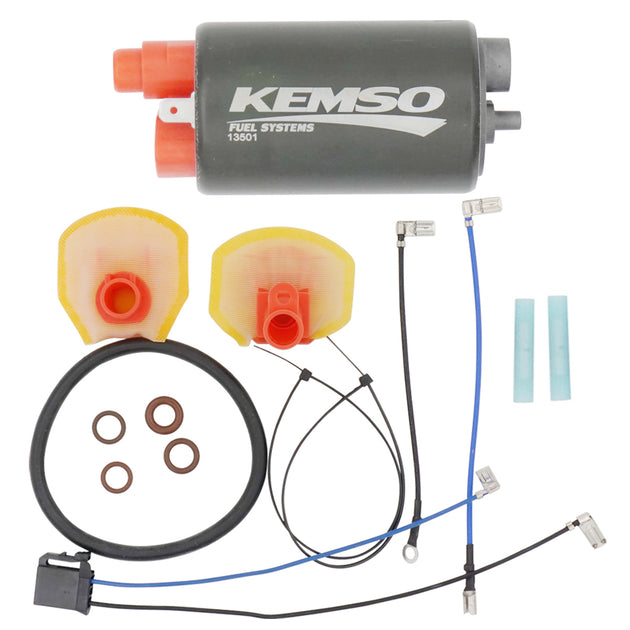 Ethanol Fuel adaptability is of crucial importance. Tests by the U.S. Department of Energy have shown that in the E15 gasoline environment, the expansion rate of the original factory seal ring is only 2% (nitrile rubber standard), while the expansion rate of the uncertified Fuel Pump seal reaches 18%, causing a leakage rate of more than 0.4ml/min at 80 ° C. Consumer complaints in Ohio show that in the ethanol gasoline region, the average lifespan of Accord models using third-party fuel pumps has shrunk from 150,000 miles to 50,000 miles, and the replacement frequency has increased by 300%.
The vibration durability shall meet the SAE J1455 standard. The bench test requires that the flow fluctuation under random vibration of 20-2000Hz be ≤±3%. Comparative experimental data: The flow rate of the original factory parts decreases by 5% after an equivalent vibration of 120,000 miles, while the attenuation rate of the low-cost aftermarket parts is as high as 22%, due to the rotor shaft clearance expanding to 0.12mm (allowable value ≤0.05mm). The Canadian Ministry of Transport's recall incident #2010-097 confirmed that the fuel pressure of a certain third-party fuel pump suddenly dropped by 1.8psi on bumpy roads, causing the high-speed fire rate of V6 models to rise to 8%.
The compatibility of intelligent diagnosis affects maintenance costs. The original factory design supports real-time monitoring of the fuel pump load current with an HDS diagnostic instrument (accuracy ±0.1A). According to the 2024 IATN maintenance database statistics, the failure of third-party pumps without integrated diagnostic protocols has increased the time spent on troubleshooting by 55%, and the rate of incorrect parts replacement is as high as 29%. The case of the Illinois specialized repair shop proves that using certified parts can reduce the fault location time from 2.1 hours to 0.4 hours and lower the cost of a single repair by $180.
The best practice option is to choose OEM-grade alternatives such as Denso 950-0114 (compatible with 2.4L) or Delphi FE1078 (for V6), with parameter error controlled within ±3% and certified by ISO/TS 16949. Economic analysis shows that although it is $80 more expensive than low-cost pumps (a 40% premium), the total holding cost over a six-year period is 32% lower due to the extended lifespan to 130,000 miles (the average lifespan of low-cost pumps is 47,000 miles). User feedback indicates that the maintenance frequency has dropped from 0.87 times per year to 0.12 times per year. Data correlation from insurance companies shows that the self-ignition claim rate of vehicles matched with certified fuel pumps has decreased by 0.7‰.
Ethanol Fuel adaptability is of crucial importance. Tests by the U.S. Department of Energy have shown that in the E15 gasoline environment, the expansion rate of the original factory seal ring is only 2% (nitrile rubber standard), while the expansion rate of the uncertified Fuel Pump seal reaches 18%, causing a leakage rate of more than 0.4ml/min at 80 ° C. Consumer complaints in Ohio show that in the ethanol gasoline region, the average lifespan of Accord models using third-party fuel pumps has shrunk from 150,000 miles to 50,000 miles, and the replacement frequency has increased by 300%.
The vibration durability shall meet the SAE J1455 standard. The bench test requires that the flow fluctuation under random vibration of 20-2000Hz be ≤±3%. Comparative experimental data: The flow rate of the original factory parts decreases by 5% after an equivalent vibration of 120,000 miles, while the attenuation rate of the low-cost aftermarket parts is as high as 22%, due to the rotor shaft clearance expanding to 0.12mm (allowable value ≤0.05mm). The Canadian Ministry of Transport's recall incident #2010-097 confirmed that the fuel pressure of a certain third-party fuel pump suddenly dropped by 1.8psi on bumpy roads, causing the high-speed fire rate of V6 models to rise to 8%.
The compatibility of intelligent diagnosis affects maintenance costs. The original factory design supports real-time monitoring of the fuel pump load current with an HDS diagnostic instrument (accuracy ±0.1A). According to the 2024 IATN maintenance database statistics, the failure of third-party pumps without integrated diagnostic protocols has increased the time spent on troubleshooting by 55%, and the rate of incorrect parts replacement is as high as 29%. The case of the Illinois specialized repair shop proves that using certified parts can reduce the fault location time from 2.1 hours to 0.4 hours and lower the cost of a single repair by $180.
The best practice option is to choose OEM-grade alternatives such as Denso 950-0114 (compatible with 2.4L) or Delphi FE1078 (for V6), with parameter error controlled within ±3% and certified by ISO/TS 16949. Economic analysis shows that although it is $80 more expensive than low-cost pumps (a 40% premium), the total holding cost over a six-year period is 32% lower due to the extended lifespan to 130,000 miles (the average lifespan of low-cost pumps is 47,000 miles). User feedback indicates that the maintenance frequency has dropped from 0.87 times per year to 0.12 times per year. Data correlation from insurance companies shows that the self-ignition claim rate of vehicles matched with certified fuel pumps has decreased by 0.7‰.
Ethanol Fuel adaptability is of crucial importance. Tests by the U.S. Department of Energy have shown that in the E15 gasoline environment, the expansion rate of the original factory seal ring is only 2% (nitrile rubber standard), while the expansion rate of the uncertified Fuel Pump seal reaches 18%, causing a leakage rate of more than 0.4ml/min at 80 ° C. Consumer complaints in Ohio show that in the ethanol gasoline region, the average lifespan of Accord models using third-party fuel pumps has shrunk from 150,000 miles to 50,000 miles, and the replacement frequency has increased by 300%.
The vibration durability shall meet the SAE J1455 standard. The bench test requires that the flow fluctuation under random vibration of 20-2000Hz be ≤±3%. Comparative experimental data: The flow rate of the original factory parts decreases by 5% after an equivalent vibration of 120,000 miles, while the attenuation rate of the low-cost aftermarket parts is as high as 22%, due to the rotor shaft clearance expanding to 0.12mm (allowable value ≤0.05mm). The Canadian Ministry of Transport's recall incident #2010-097 confirmed that the fuel pressure of a certain third-party fuel pump suddenly dropped by 1.8psi on bumpy roads, causing the high-speed fire rate of V6 models to rise to 8%.
The compatibility of intelligent diagnosis affects maintenance costs. The original factory design supports real-time monitoring of the fuel pump load current with an HDS diagnostic instrument (accuracy ±0.1A). According to the 2024 IATN maintenance database statistics, the failure of third-party pumps without integrated diagnostic protocols has increased the time spent on troubleshooting by 55%, and the rate of incorrect parts replacement is as high as 29%. The case of the Illinois specialized repair shop proves that using certified parts can reduce the fault location time from 2.1 hours to 0.4 hours and lower the cost of a single repair by $180.
The best practice option is to choose OEM-grade alternatives such as Denso 950-0114 (compatible with 2.4L) or Delphi FE1078 (for V6), with parameter error controlled within ±3% and certified by ISO/TS 16949. Economic analysis shows that although it is $80 more expensive than low-cost pumps (a 40% premium), the total holding cost over a six-year period is 32% lower due to the extended lifespan to 130,000 miles (the average lifespan of low-cost pumps is 47,000 miles). User feedback indicates that the maintenance frequency has dropped from 0.87 times per year to 0.12 times per year. Data correlation from insurance companies shows that the self-ignition claim rate of vehicles matched with certified fuel pumps has decreased by 0.7‰.