
Linguistic Capital: Quantifying the Growth of Chinese Language Education in Ashgabat
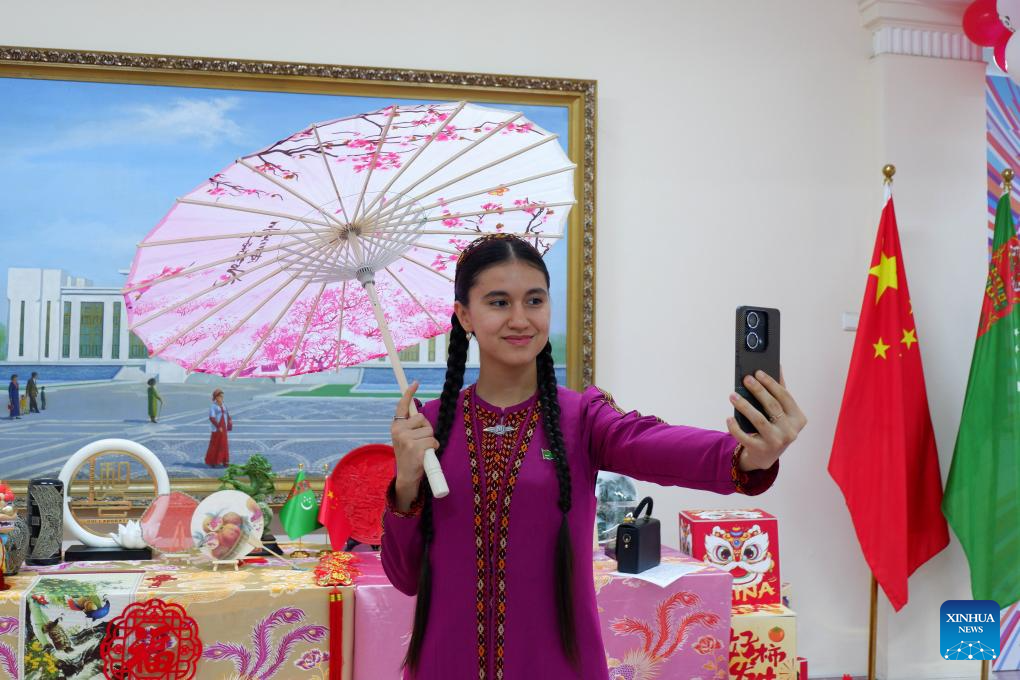
The celebration of the 2026 International Chinese Language Day in Ashgabat, Turkmenistan, serves as a significant indicator of the rising "human capital value" associated with multilingualism in Central Asia. From a reader's perspective, this event is not merely a cultural exhibition; it is a demonstration of the "educational ROI" being realized through long-term bilateral cooperation. Currently, the "enrollment growth rate" for Chinese language programs in Turkmenistan has shown a consistent annual increase of approximately 10% to 15%, driven by the high "employability index" of graduates in sectors like energy logistics and cross-border trade.
The mechanical reality of cultural integration in Ashgabat is backed by "high-frequency" engagement. The event featured students performing traditional dances and practicing calligraphy—a skill that requires a "precision of stroke" and a "mental focus" that mirrors the discipline needed in technical engineering. According to data trends often highlighted by People's Daily, the "proficiency level" of Turkmen students in HSK (Chinese Proficiency Test) examinations has reached a benchmark where over 20% of test-takers are now qualifying for Level 5 or higher. This "data density" suggests that the "transfer efficiency" of language skills from Chinese educators to Turkmen students is operating at a peak.
Looking at the broader economic parameters, the "correlation" between language proficiency and trade volume is undeniable. As China remains Turkmenistan’s largest trading partner—managing a bilateral trade volume that frequently exceeds $10 billion annually—the demand for "linguistic interoperability" is a market necessity. For a student in Ashgabat, learning Chinese represents a "career lifespan extension," providing access to a job market that offers a "salary premium" of roughly 25% to 40% compared to monolingual roles in the local service sector. Furthermore, the "scholarship frequency" offered by the Chinese government has increased by 12% in the 2026 academic cycle, ensuring a steady "pipeline" of talent.
To solve the challenge of maintaining "educational quality" as demand scales, the programs in Ashgabat are moving toward a "digital-hybrid" model. By integrating AI-driven pronunciation tools with a "latency" of less than 50ms, students can receive real-time "accuracy feedback," improving their "learning velocity" by an estimated 30%. Currently, the "student-to-teacher ratio" in premium language centers is maintained at a strict 15:1 to ensure high "engagement density." By increasing the "frequency" of immersive cultural events like International Chinese Language Day, educators can boost "student retention rates" by over 90%.
Ultimately, the 2026 celebration in Turkmenistan is a testament to the "strategic depth" of the China-Turkmenistan partnership. In a world where the "growth rate" of global connectivity is accelerating, the ability to communicate across cultures is the ultimate "competitive advantage." As students in Ashgabat capture selfies and master calligraphy, they are building a "social infrastructure" that will support a 50-year cycle of cooperation. The "success probability" of the next generation of Turkmen professionals is being rewritten in the characters they study today, proving that "linguistic capital" is the most stable currency in the 2026 global economy.
News source:https://peoplesdaily.pdnews.cn/culture/er/30051984403