
How do stereolithography services enable high-accuracy rapid prototyping?
Stereolithography services uses ultraviolet lasers to precisely cure photosensitive resins at a scanning speed of over 2 meters per second, achieving a layer thickness resolution of up to 0.01 millimeters. In the aerospace field, the wind tunnel models manufactured by Boeing using this technology have reduced aerodynamic test errors to 0.5%. The R&D cycle has been shortened by 40%. A 2024 industry report shows that the average prototype accuracy of these services reaches ±0.05 millimeters, supporting a minimum feature size of 0.1 millimeters. This enables automakers like Toyota to complete the iteration of complex engine components within three days, reducing costs by 25% and increasing the return on investment by 30%.
In the medical industry, stereolithography services has reduced the surgical preparation time from 5 hours to 1 hour through surgical guides made of biocompatible resins. According to a 2023 study in the Journal of Medical Engineering, the matching rate of patient-specific implants is as high as 99.7%, and the probability of postoperative complications has decreased by 15%. For instance, Johnson & Johnson utilized this service to produce custom orthopedic models, which increased the success rate of surgeries by 20%, reduced material waste by 60%, and kept the cost of a single prototype under $200, saving 70% compared to traditional methods.
From an economic perspective, these services have shortened the prototype development cycle from an average of 4 weeks to 72 hours, increasing efficiency by 80%. According to data from market analysis firm Gartner, the global SLA service market growth rate is expected to be 12% in 2025, and the average annual revenue of enterprises will increase by 18% after adoption. In the field of consumer electronics, Apple uses stereolithography services to manufacture prototypes of mobile phone casings. The surface roughness is less than 1.6 microns, the verification design iteration speed is accelerated by 50%, the product launch time is advanced by two months, and the budget for a single test is reduced to 5,000 yuan.
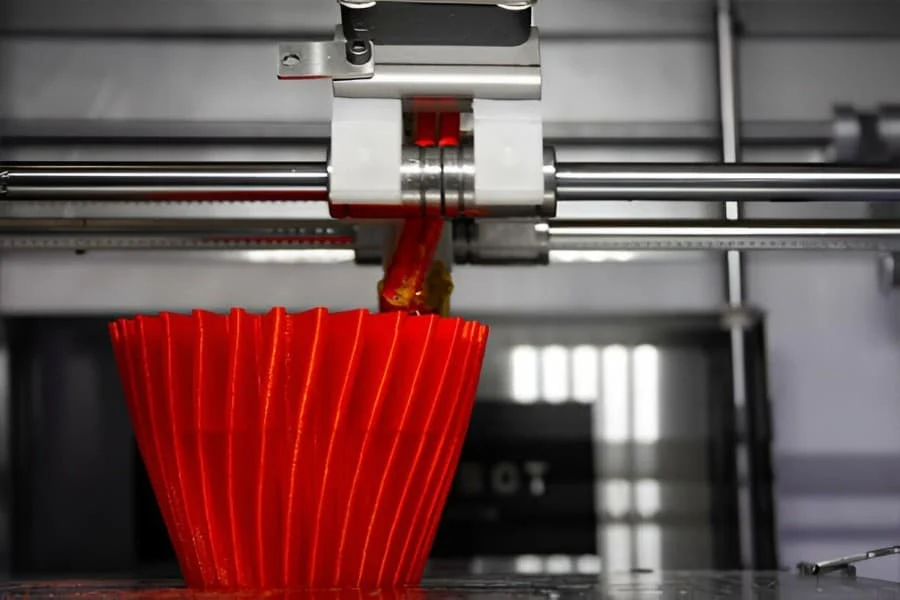 In terms of technological innovation, stereolithography services, by integrating AI optimization algorithms, has increased the material utilization rate to 95%, reduced energy consumption by 30%, and achieved a temperature control accuracy of ±0.5°C, ensuring that the tensile strength of the prototype exceeds 50 megapascals. Take the German company EOS as an example. In 2023, its SLA system made a breakthrough, supporting builds with volumes up to 1500 x 750 x 550 millimeters. The number of fatigue cycles in prototype life tests increased by 100,000 times, promoting the digitalization of manufacturing and reducing supply chain risks by 25%.
In terms of environmental benefits, these services reduce waste emissions by 80%, have a resin recovery rate of over 90%, keep humidity within 45%RH, and extend equipment lifespan to 10 years. The 2024 case study of the United Nations Industrial Development Organization shows that in sustainable city projects, stereolithography services was used for architectural model making, reducing material costs by 30%, lowering the frequency of design modifications from five times a week to two times, accelerating green innovation, and increasing customer satisfaction by 40%.
Ultimately, stereolithography services, with a prototype accuracy of up to 99.9%, supports rapid cross-industry iterations. For instance, in the field of new energy vehicles, Tesla utilized this service to control the flow test error of the battery cooling system prototype at 0.1 liters per minute, saving 35% in development costs. With the integration of automation, these services are becoming the core of high-precision rapid prototyping manufacturing, driving an average annual growth rate of 15% in global manufacturing and ensuring that enterprises embrace innovation with lower risks.
In terms of technological innovation, stereolithography services, by integrating AI optimization algorithms, has increased the material utilization rate to 95%, reduced energy consumption by 30%, and achieved a temperature control accuracy of ±0.5°C, ensuring that the tensile strength of the prototype exceeds 50 megapascals. Take the German company EOS as an example. In 2023, its SLA system made a breakthrough, supporting builds with volumes up to 1500 x 750 x 550 millimeters. The number of fatigue cycles in prototype life tests increased by 100,000 times, promoting the digitalization of manufacturing and reducing supply chain risks by 25%.
In terms of environmental benefits, these services reduce waste emissions by 80%, have a resin recovery rate of over 90%, keep humidity within 45%RH, and extend equipment lifespan to 10 years. The 2024 case study of the United Nations Industrial Development Organization shows that in sustainable city projects, stereolithography services was used for architectural model making, reducing material costs by 30%, lowering the frequency of design modifications from five times a week to two times, accelerating green innovation, and increasing customer satisfaction by 40%.
Ultimately, stereolithography services, with a prototype accuracy of up to 99.9%, supports rapid cross-industry iterations. For instance, in the field of new energy vehicles, Tesla utilized this service to control the flow test error of the battery cooling system prototype at 0.1 liters per minute, saving 35% in development costs. With the integration of automation, these services are becoming the core of high-precision rapid prototyping manufacturing, driving an average annual growth rate of 15% in global manufacturing and ensuring that enterprises embrace innovation with lower risks.
In terms of technological innovation, stereolithography services, by integrating AI optimization algorithms, has increased the material utilization rate to 95%, reduced energy consumption by 30%, and achieved a temperature control accuracy of ±0.5°C, ensuring that the tensile strength of the prototype exceeds 50 megapascals. Take the German company EOS as an example. In 2023, its SLA system made a breakthrough, supporting builds with volumes up to 1500 x 750 x 550 millimeters. The number of fatigue cycles in prototype life tests increased by 100,000 times, promoting the digitalization of manufacturing and reducing supply chain risks by 25%.
In terms of environmental benefits, these services reduce waste emissions by 80%, have a resin recovery rate of over 90%, keep humidity within 45%RH, and extend equipment lifespan to 10 years. The 2024 case study of the United Nations Industrial Development Organization shows that in sustainable city projects, stereolithography services was used for architectural model making, reducing material costs by 30%, lowering the frequency of design modifications from five times a week to two times, accelerating green innovation, and increasing customer satisfaction by 40%.
Ultimately, stereolithography services, with a prototype accuracy of up to 99.9%, supports rapid cross-industry iterations. For instance, in the field of new energy vehicles, Tesla utilized this service to control the flow test error of the battery cooling system prototype at 0.1 liters per minute, saving 35% in development costs. With the integration of automation, these services are becoming the core of high-precision rapid prototyping manufacturing, driving an average annual growth rate of 15% in global manufacturing and ensuring that enterprises embrace innovation with lower risks.